
Where Do Bed Bugs Come From?
Bed bugs are not a sign of a dirty home — they most often hitch a ride in on luggage, second-hand furniture, delivery boxes or even from neighbouring flats. Be especially alert if bites appear after travelling or moving house.
Their breeding rate is alarming: one female lays 200–300 eggs in her lifetime, and an infestation can spread through an entire flat within two to three months. The earlier you catch them, the easier the treatment.
5 Warning Signs of Bed Bugs
1. Rows of red, itchy bites on your arms and legs in the morning — typically three or more in a straight line.
2. Tiny blood spots or rust-coloured stains on sheets and pillowcases — left when engorged bugs are crushed.
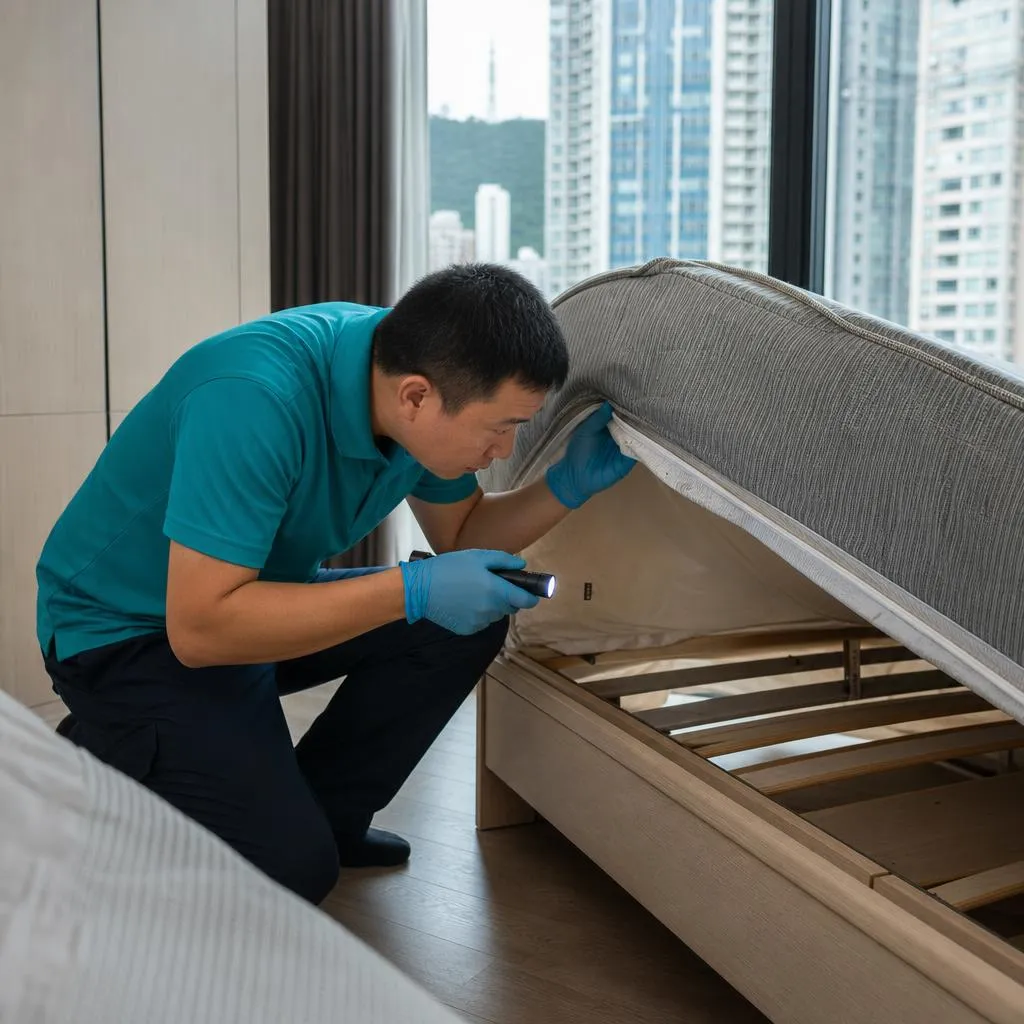
3. Small black dots (bed bug droppings) along mattress seams and bed frame joints.
4. Translucent shed skins or tiny white eggs, usually hidden in wood cracks and screw holes.
5. An unusual sweet, musty odour in the room — the scent secreted by a bed bug colony.
DIY Treatment or Professional Pest Control?
Bed bugs hide deep in bed frames, skirting boards and power sockets. Insecticide sprays only kill the ones on the surface — not the eggs — so infestations often rebound and spread further. Washing bedding and clothes above 60°C and tumble-drying does kill bugs and eggs on fabric.
Professional pest control inspects every hiding spot inch by inch, combines targeted treatments with steam to break the full life cycle, and schedules follow-up visits to confirm eradication. Don’t delay with random spraying — the longer you wait, the more it costs.
Cleaning Master
Want to Learn More? Contact Us Now
Professional home cleaning, deep cleaning and disinfection services across all 18 districts of Hong Kong. Transparent pricing with instant quotes — enquire today.