Where Does Formaldehyde Come From?
Formaldehyde mainly comes from the adhesives in engineered wood such as plywood and fibreboard, and is also found in paint, wallpaper and fabric furniture. Newly renovated flats and new furniture keep releasing it — for as long as 3 to 15 years.
Formaldehyde is a colourless gas with a pungent smell. Long-term exposure can cause eye, nose and throat irritation, headaches and respiratory problems — the WHO classifies it as a Group 1 carcinogen. Pregnant women, children and the elderly are most vulnerable.
Is Ventilation Alone Enough?
Ventilation does dilute indoor formaldehyde, but many Hong Kong flats have few windows and poor airflow — and since formaldehyde is released continuously, levels rebound as soon as windows close. At least 3 months of ventilation is generally advised, but ventilation alone struggles to reach formaldehyde deep within board materials.
Folk remedies like pineapple peel or tea leaves only mask the smell, and activated carbon has limited capacity and saturates quickly — neither is a long-term solution.
How Does Professional Formaldehyde Removal Work?
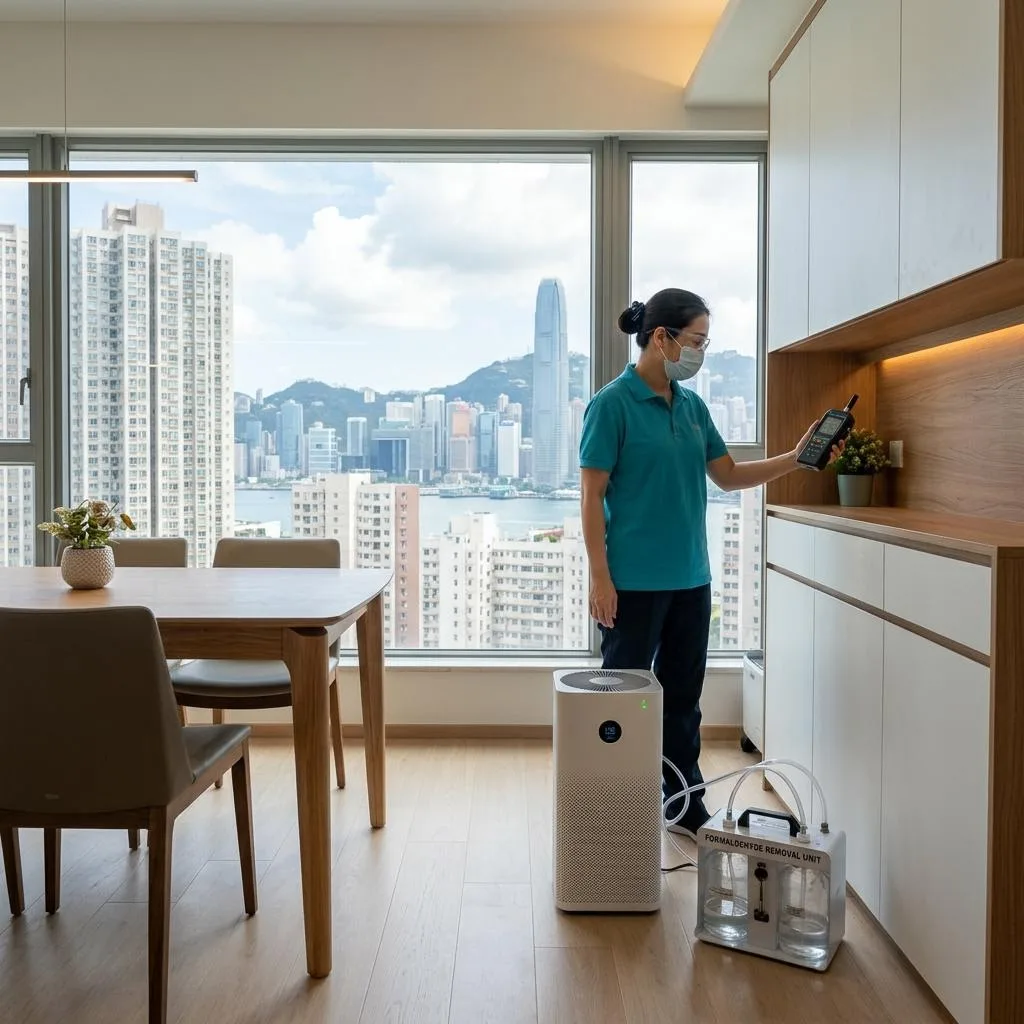
Professionals first measure indoor formaldehyde levels with instruments, then spray a formaldehyde-removal solution to treat existing formaldehyde, followed by a photocatalyst coating — which continuously breaks formaldehyde down into water and carbon dioxide under light for long-lasting protection. Dark areas like under beds and inside cabinets are treated with a light-free catalyst coating.
Levels are re-tested afterwards with a transparent before-and-after report. For best results, schedule the treatment after all furniture has arrived but before you move in.
Cleaning Master
Want to Learn More? Contact Us Now
Professional home cleaning, deep cleaning and disinfection services across all 18 districts of Hong Kong. Transparent pricing with instant quotes — enquire today.