Why Do Fridges Harbour Odours and Bacteria?
Many assume a cold fridge stops bacteria, but pathogens like listeria keep multiplying at 4°C. Juices dripping onto shelves, expired food left inside, and raw food stored next to cooked all lead to cross-contamination.
Fridge odours mostly come from spoiled food, spilled sauces and a blocked drain hole. Bad smells aren’t just unpleasant — other foods absorb them, affecting both taste and safety.
Step-by-Step Deep Clean
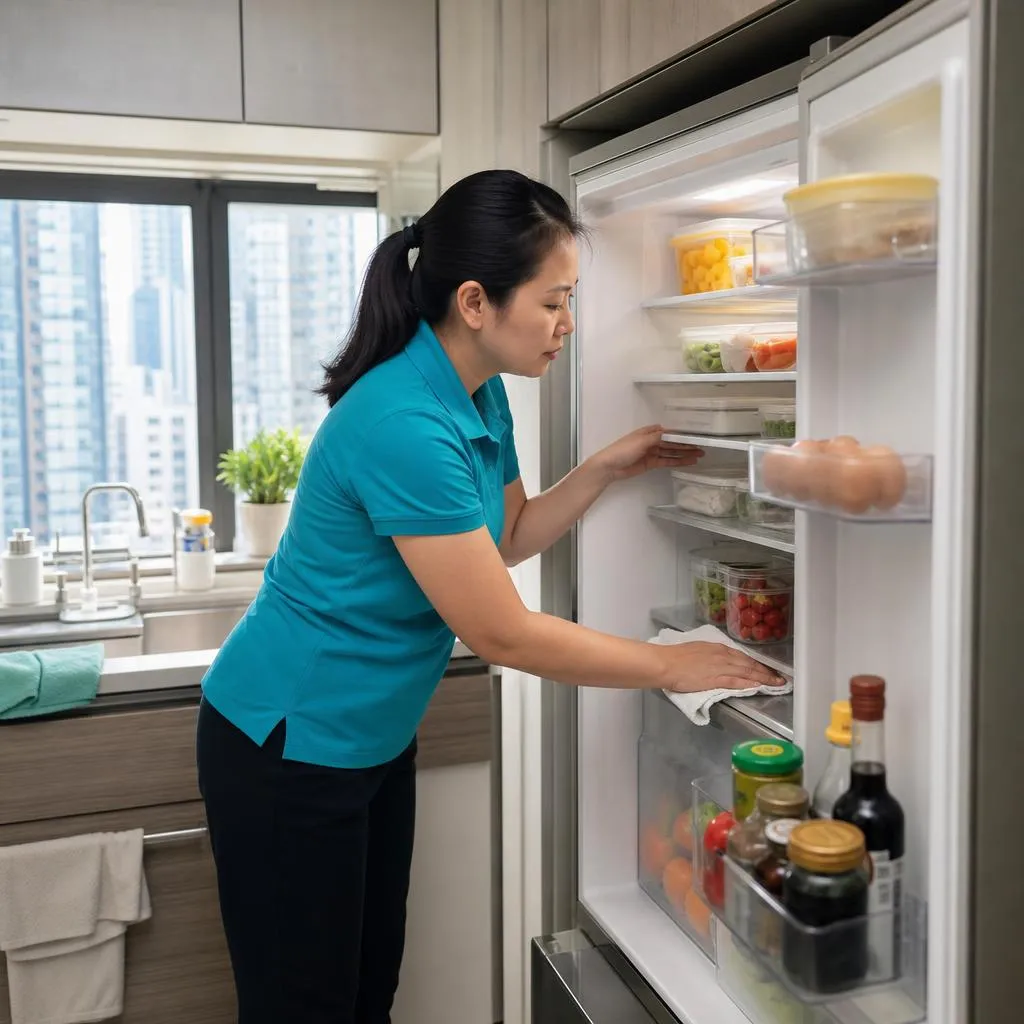
1. Empty the fridge and throw out anything expired — or anything you can’t remember buying.
2. Remove shelves and drawers, wash them in warm soapy water, and dry them fully before putting them back.
3. Wipe the interior walls with 1:50 diluted bleach or a baking soda solution, and clean mould from the door gasket with cotton buds.
4. Clear the drain hole at the back wall with a cotton bud or drain probe to stop water pooling and smelling.
5. Leave an open box of baking soda or used coffee grounds inside as a natural deodoriser.
How Often Is Enough?
Give shelves and door edges a quick wipe weekly, and do the full deep clean above every 1 to 3 months. Check for expired food each time you load new groceries — make it a habit and clutter never builds up.
If your fridge hasn’t been cleaned in ages, has heavy mould stains and odours, or you want the whole kitchen disinfected in one go, book a professional home cleaning team — they’ll even clean the condenser coils behind the fridge, saving electricity and improving hygiene.
Cleaning Master
Want to Learn More? Contact Us Now
Professional home cleaning, deep cleaning and disinfection services across all 18 districts of Hong Kong. Transparent pricing with instant quotes — enquire today.